
Dr. Vaishali Sonavane
We decided that I would go to Persuasive Education in Pune.
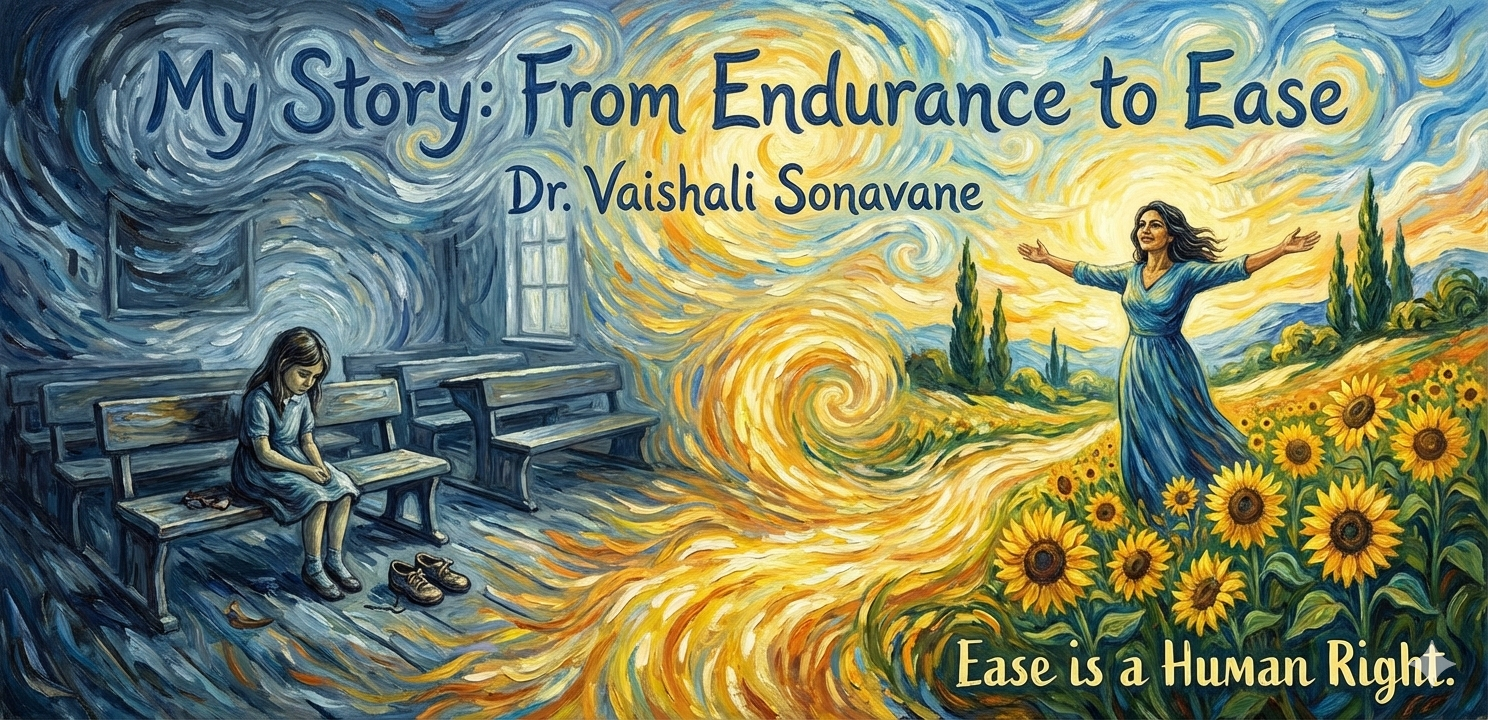
I was in the 5th standard. Leaving home was the toughest thing I had ever done. I cried continuously—silently, inside myself—until I reached the hostel, thinking only of my mother.
The night before my journey, my mother was crying. I told her,
“Don’t cry. I am going for my growth. One day, you will be proud of these moments.”
My uncle dropped me off at the hostel. Even after leaving me inside, I saw him sitting outside. I asked him,
“Why are you still here?”
He said he wanted to make sure that I would stay back.
I was sad—but I was also very hopeful.
He left only after feeling at ease that I would be fine.
Every Sunday, parents used to come to visit their children, my roommates, and classmates. They brought necessities, goodies, love, affection, and care. I was deeply craving all of that.
No one came to see me for the next three months.
Every Sunday, I waited. I wrote letters.
Even today, I do not fully know what was happening inside me.
I started breathing heavily. They said I had “dama” (asthma).
I began suffocating and choking.
I was asked to stand outside the classroom every day for a month because I did not have school shoes.
I was confined to bed for almost fifteen days in the hostel.
One tai came to me and said,
“How long will you remain sick and bunk school?
Will your parents feel good knowing this?
Will the purpose of staying away from them be fulfilled like this?
So many girls try to get a good education. So few get this opportunity.
You have been given this chance—make the best of it.”
I returned to school.
My class teacher, Suchitra Kamble, took the measurement of my feet, brought me shoes, and said,
“When your parents come, you can return the money gradually.”
My music teacher, Karve Madam, asked about my health—and in that moment, I felt alive again.
No one spoke to me. I had no friends.
They made fun of my language. They called me “mhora-magha,” mocking my rural Marathi accent.
I wondered why everyone spoke as if they were reading directly from a book.
I sat on the last bench, half alive.
My class teacher, Suchitra Kamble, asked me to sit on the front bench, right in front of her. She said she loved hearing me speak—it reminded her of a close friend.
She told me,
“Even if everyone here makes you feel lesser, remember—Pune is known for education.
If you focus and excel in your studies, the same people will one day respect you.”
That became my survival line.
I scored very well—almost first in the class, except in mathematics.
My life changed.
People stopped looking at what I lacked.
They started admiring what I could do.
That was my first major lesson in life:
Do not let the outside world bring you down.
Rise higher through your inner world.
I made my first friend. I helped her during exams. She introduced me to yoga.
We trained together in karate.
My mind, body, and energy shifted.
I gained many friends.
In the 8th standard, I received the Ashta Pailu Vyaktimatva Award.
I learned a lasting lesson:
Keep growing. Keep learning.
Keep adding value—to yourself, to your life, and to the world.
Today, my work is rooted in that lesson.
I help women move from endurance to ease—without shame, without urgency, without breaking themselves to survive.
Ease is not a luxury.
It is a human right.
If this resonates, you’re already part of the Ease Revolution™.
Leave a Reply