
Tag: Dr. Vaishali Sonavane
-
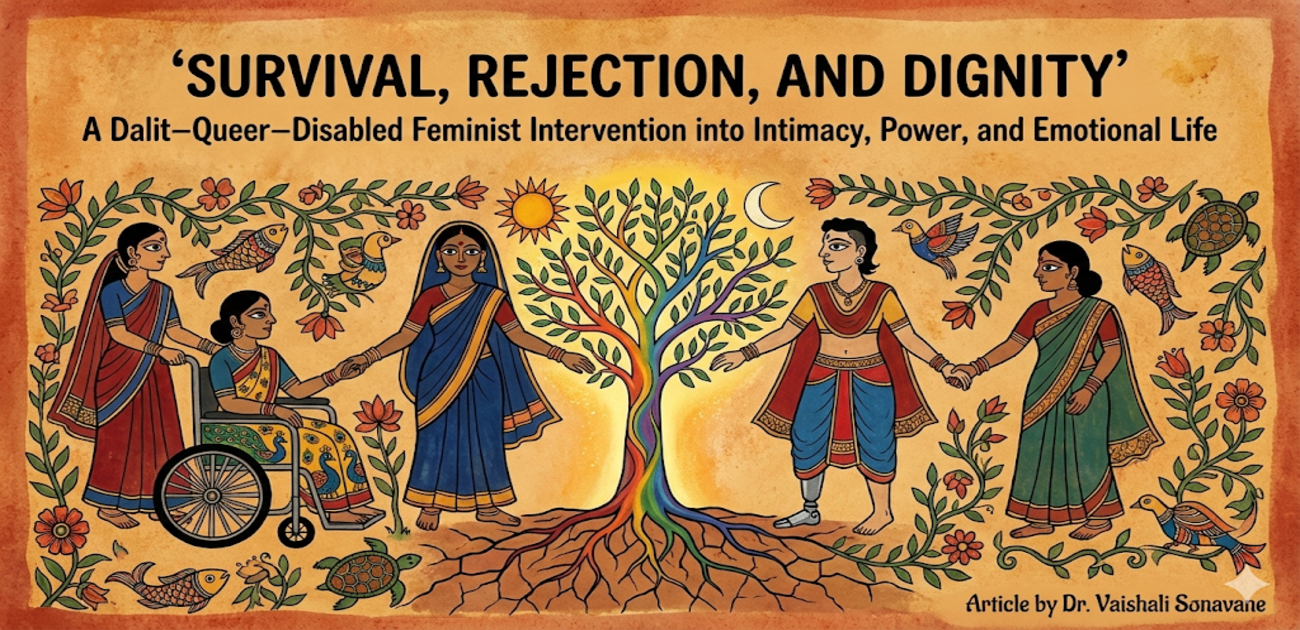
Survival, Rejection, and Dignity: A Dalit–Queer–Disabled Feminist Intervention into Intimacy, Power, and Emotional Life
Article by Dr. Vaishali Sonavane Abstract This article develops a Dalit–Queer–Disabled feminist framework to understand survival, rejection, and relational harm as structurally produced conditions rather than individual failures. Drawing from Ambedkarite anti-caste movement, queer and disabled feminist scholarship, trauma and attachment theory, and critical theories of power, the paper examines how caste, gender, sexuality, disability,…
-
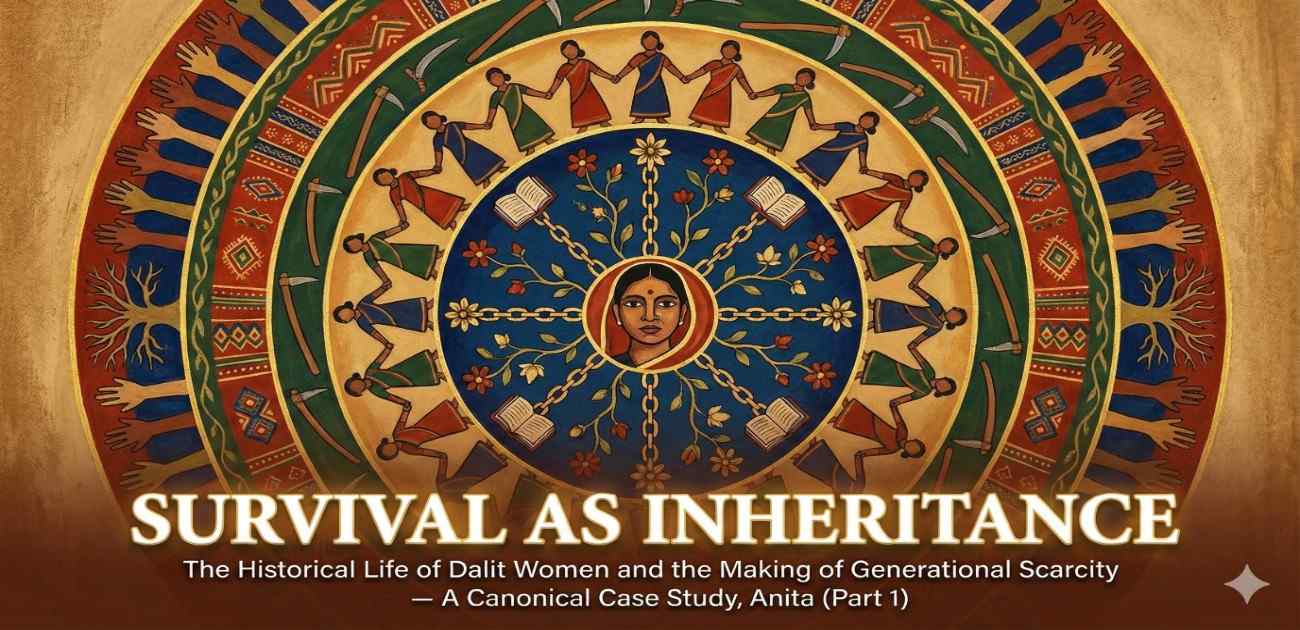
Survival as Inheritance: The Historical Life of Dalit Women and the Making of Generational Scarcity — A Canonical Case Study, Anita (Part 1)
By Dr. Vaishali Sonavane Intro Note: This is the first part of a two-part series exploring the life narrative of Anita (pseudonym), a Dalit Ambedkarite feminist activist. This section traces her childhood, schooling, and early encounters with caste, situating them within the Caste-Based Survival Trauma (CBST) framework. Abstract This article examines the life narrative of…
-
Survival as Inheritance: The Historical Life of Dalit Women and the Making of Generational Scarcity
(This article examines historically produced survival regimes among Dalit women. Dalit women who have broken these structures and are thriving beyond them will be taken up in a subsequent article.) By Dr. Vaishali Sonavane Abstract This article examines how survival among Dalit women is historically produced, relationally transmitted, and structurally enforced, creating intergenerational patterns of…
-
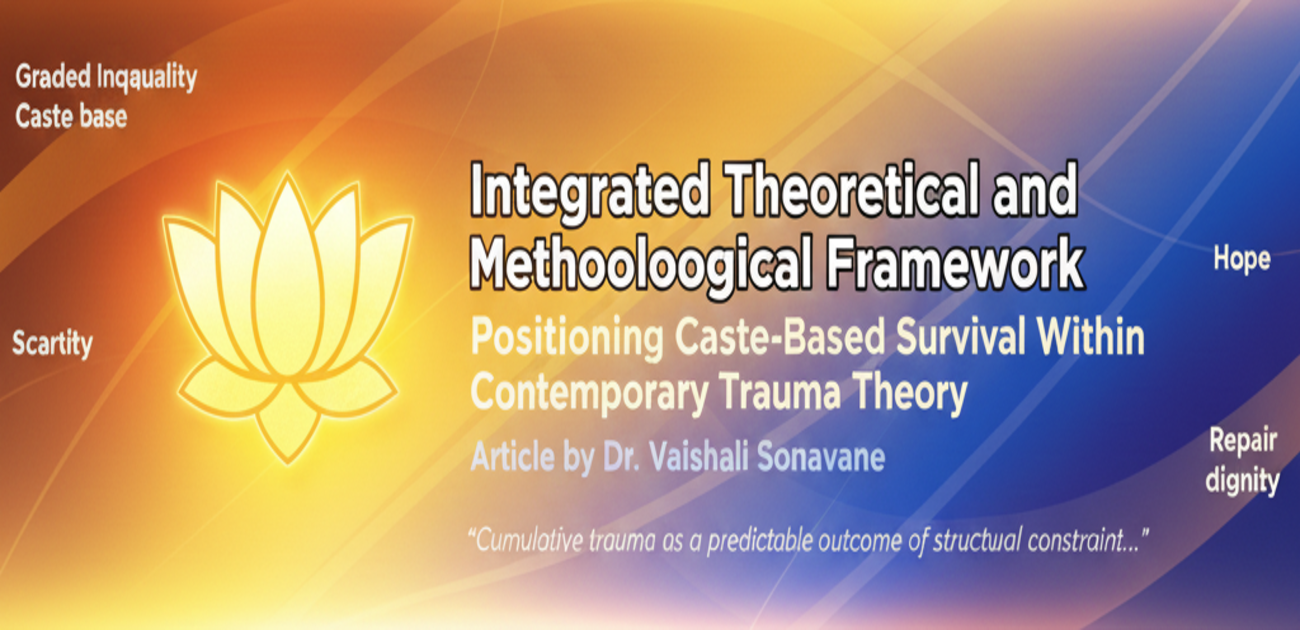
Integrated Theoretical and Methodological FrameworkPositioning Caste-Based Survival Within Contemporary Trauma Theory
Abstract Contemporary trauma frameworks, such as complex trauma, Disorders of Extreme Stress Not Otherwise Specified (DESNOS), and Cumulative Trauma Disorder (CTD), have established that psychological distress may arise from prolonged and repeated exposure to harm rather than discrete events. However, these models remain insufficiently theorised in relation to social structures that systematically organise exposure to…